Appliance repair and installation for Washington homes and businesses: refrigerators, washers, dryers, ovens, dishwashers, and built in appliances, with published price ranges up front and a written figure before any work begins.
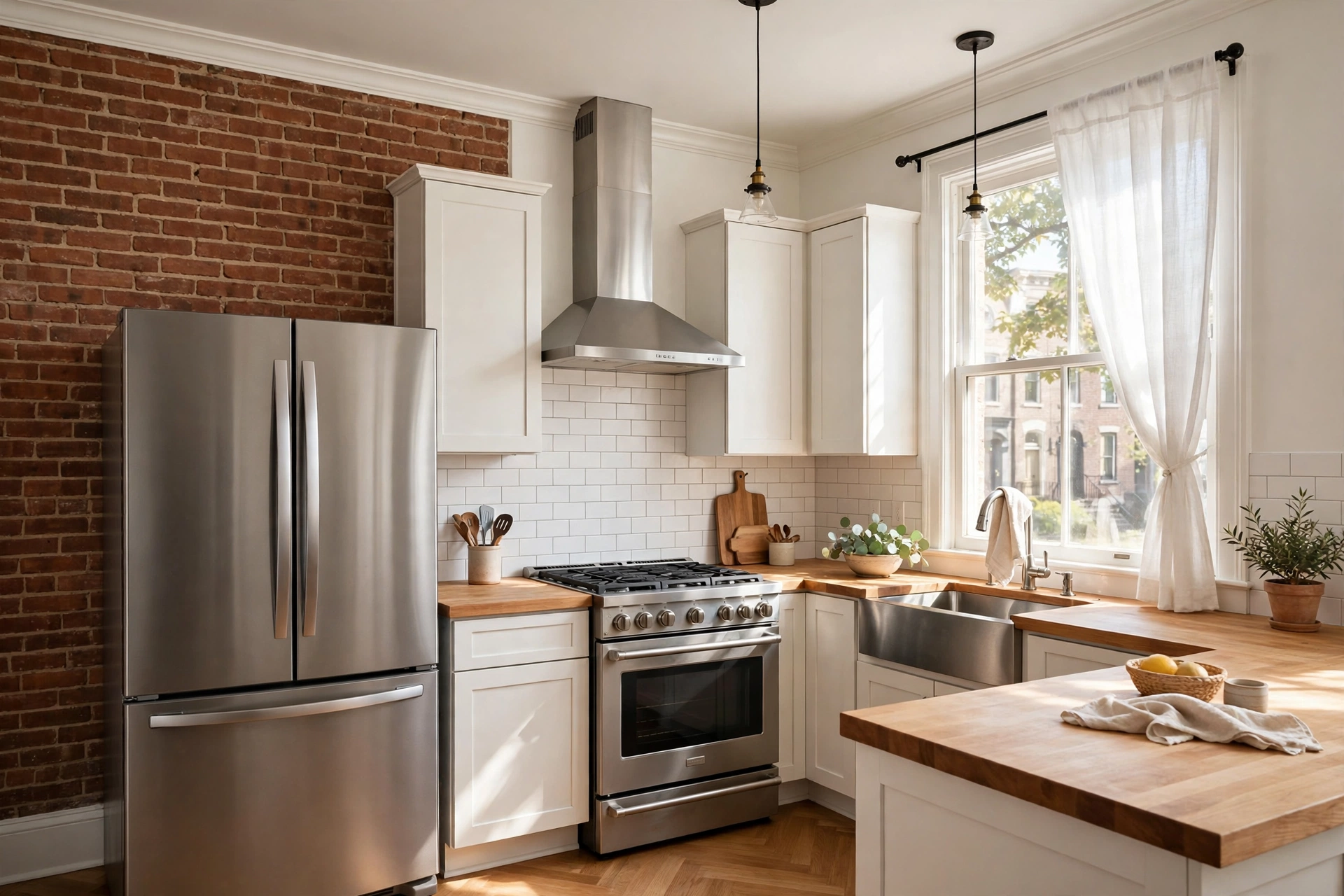
Appliance repair in a Washington, DC kitchen by Washington DC Appliance Repair Co
At Washington DC Appliance Repair Co, we repair refrigerators, ovens, ranges, washers, dryers, and dishwashers for homeowners in Washington, DC. Our days run through kitchens and laundry rooms across the city, and the calls repeat because the machines do: a fridge warming up overnight, a washer stopped mid cycle, full. Those calls shape the work, and this page describes how the work is done.
The pattern across Washington is written by its housing. Washington's housing runs from Capitol Hill rowhouses and Georgetown townhouses to condo towers in Shaw and Logan Circle and single family streets in Chevy Chase and Brookland, and every housing type keeps its own appliance profile. Machines installed together fail together, which is why whole streets seem to need the same repairs in the same seasons.
What this company sells first is certainty: a fault proven by testing, a figure in writing, and a repair verified under load. The appliances of Washington get that sequence whether the ticket is a refrigerator or a range hood.
A call from Capitol Hill: Bottom freezer unit clicking and refusing to start. Testing found the compressor start relay had burned contacts. We fitted a new start device, confirmed compressor draw, and left the unit cooling on test.
Turnaround
Finished in one visit.
Final Price
$410
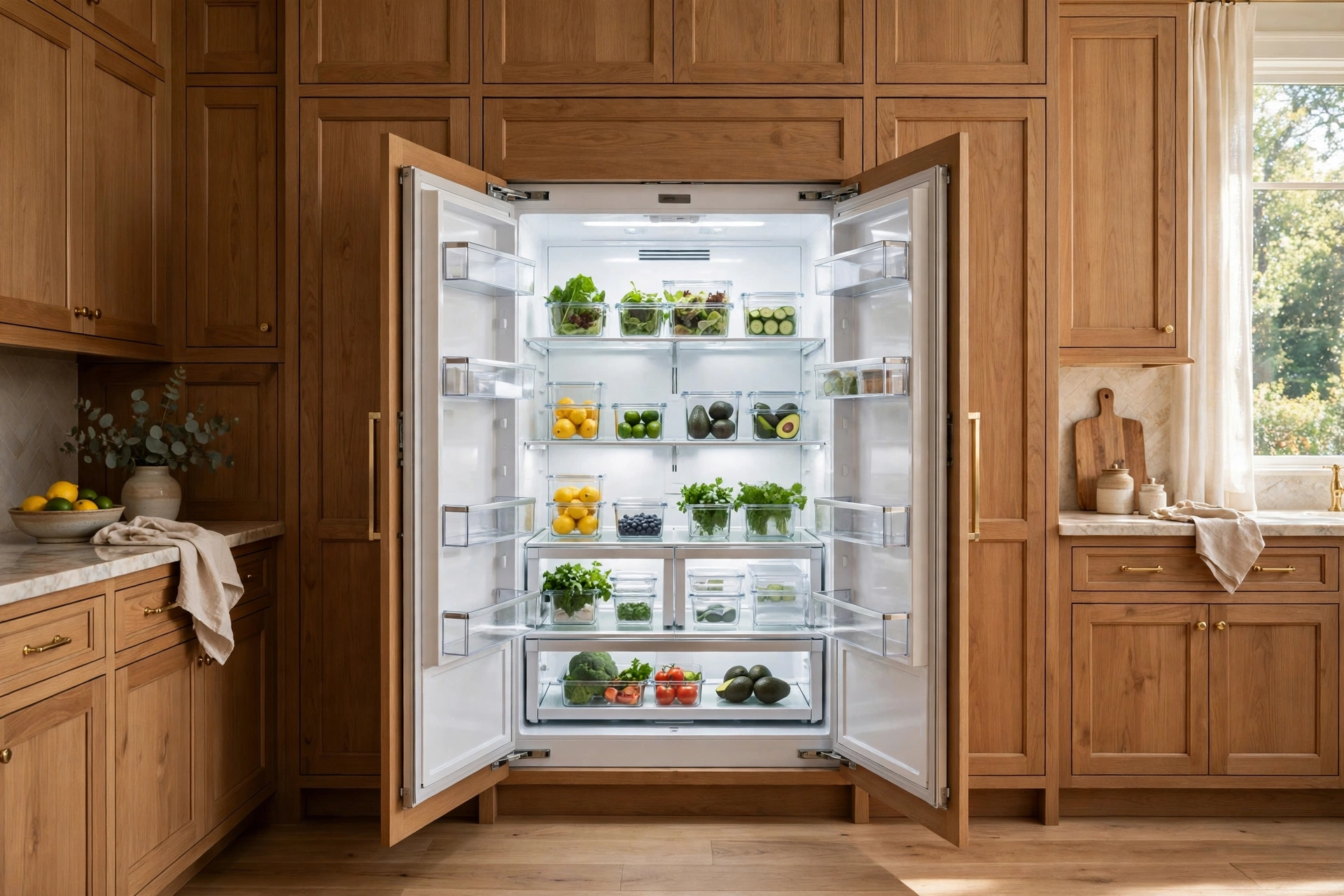
A call from Georgetown: Built in refrigerator warming in the fresh food zone. Testing found the fresh food evaporator fan had failed while the freezer zone held zero. We replaced the fan, cleared the frost bridge, and logged both zones back to specification.
Turnaround
Finished in one visit.
Final Price
$375
A call from Dupont Circle: Top load washer stopping full of water. Testing found a baby sock wound through the drain pump impeller. We cleared the pump, tested it under load, and ran a full cycle to confirm clean drainage.
Turnaround
Finished in one visit.
Final Price
$340
Residential Appliance Repair in Washington, DC
The menu below is the whole trade as households actually use it: the cooling, cooking, and laundry machines, the specialty units around them, and installation done to the same standard as repair. Every service page publishes its cost band before you book anything. Washington homeowners hear the same sequence from us because the sequence is the service.
Warm air in the fresh food cabinet almost always traces to airflow: a failed evaporator fan, a damper stuck shut, or coils so loaded with dust that the system cannot shed heat. Households in Washington book it through the form below, and the visit follows the pattern this page describes: evidence first, one figure, then the fix.
Steady temperature error is the friendliest oven fault: a drifting sensor or a control that needs calibration, verified with a thermometer across three test cycles. In Washington, it is among the most booked services on this site, and it is diagnosed the way every service here is: tested first, quoted in writing, then repaired.
Standing water and a humming pump is the most common washer call in the trade: a failed pump, or something small and cloth stopping it cold. The service page carries the full fault list and the cost band for Washington homes.
Tumbling with cold air is the classic electric dryer pattern: an open heating element or a tripped thermal fuse, both confirmed with a continuity meter. The service page carries the full fault list and the cost band for Washington homes.
Standing water at the end of a cycle is the most common call, and the drain pump is the first suspect, followed by a clogged filter or a drain hose blocked where it meets the sink plumbing. It is core work in Washington, quoted from the published band on its service page after a real diagnosis, never from the symptom alone.
Slight temperature drift is the expensive freezer fault, because it quietly degrades everything stored while the machine still sounds healthy. Households in Washington book it through the form below, and the visit follows the pattern this page describes: evidence first, one figure, then the fix.
Gas zones fail at ignition or at flame quality: electrodes, switches, and ports for the first; clogged or corroded burner heads for the second. The service page carries the full fault list and the cost band for Washington homes.
Door switches lead the repair list by a wide margin: a microwave that will not start, or that starts when the door moves, is usually reporting a switch, not its magnetron. It is core work in Washington, quoted from the published band on its service page after a real diagnosis, never from the symptom alone.
Commercial Appliance Repair in Washington, DC
Commercial Refrigerator Repair
Working kitchens in Washington cannot wait politely, so commercial refrigeration is scheduled by stakes: product first, then the repair, documented for whoever approves the invoice. In Washington, that is not a slogan; it is the sequence our visits actually follow.
Commercial Laundry Repair
Multi household laundry in Washington is serviced with unit level records: what failed, what was fitted, and what is likely next, the paperwork property managers actually need. From one end of Washington to the other, the method does not change with the neighborhood.
Restaurant Oven and Range Repair
Light commercial cooking, the ranges and ovens of cafes, church kitchens, and small restaurants, is serviced in its honest category: tested with thermometers, quoted in writing, and returned to service with readings recorded. The households of Washington plan around real figures, and this page exists so they can.
Appliance Repair for Rental Properties and Property Managers
Managers booking from Washington get the file ready version of appliance repair: a written verdict, a single figure, and a record that survives the group chat and the budget meeting alike. It is a slower way to start a job in Washington and a much faster way to finish one.
Recent appliance repair Projects in Washington, DC
The cards below follow the shape of recent work in Washington neighborhoods. Each names the repair type, where it took place, when, and what the finished repair cost.
Dishwasher Repair in Georgetown, September 2026, $165
The call from Georgetown was a dishwasher leaking at a door corner. A hardened seal and a quarter inch of level were the whole story; both were put right and the floor stayed dry through a heated cycle.
Dryer Repair in Adams Morgan, August 2026, $160
A dryer in Adams Morgan ran hot and slow. The element tested weak and the first vent bend was packed; with both addressed, a timed load dried in a single cycle.
Oven and Range Repair in Petworth, July 2026, $220
The Petworth call was a range that lit slowly and heated slower. A weak igniter was the cause, replaced and timed across a full preheat.
Freezer and Ice Maker Repair in Logan Circle, June 2026, $270
In Logan Circle, a freezer frosting at the door traced to a split seal and summer humidity doing the rest. The seal was renewed, frost cleared, and ice production confirmed on a return check.
Stove and Cooktop Repair in Georgetown, May 2026, $240
One element had failed outright, and the other traced to a worn switch behind its control knob. Both parts were replaced during the visit. All four elements were then run in turn during testing.
Front Load Washer Repair in Adams Morgan, April 2026, $365
A front loader in Adams Morgan shook the laundry room on spin. Worn dampers and a loaded filter were the findings; with both handled, a full load spun quietly.
Why Washington DC Appliance Repair Co Is the Best Appliance Repair in Washington, DC
Our Process
Every job follows the same order: listen to the symptom, test the machine, name the fault with evidence, quote one figure in writing, then repair and prove the repair under load. The order matters because each step protects the next one; a quote written before the test is a guess with a dollar sign, and a repair without a proof cycle is a promise instead of a result. The visit record documents readings and parts, so the work can be audited by anyone, including us, months later. Washington keeps its appliances a long time, and this standard is built for exactly that habit.
Materials We Use
Parts are matched to the machine by model and specification, and wear parts like hoses, lines, and seals are renewed rather than reused when a job opens them up. Where a component has a known better revision, that is what gets fitted, and the old part is available for you to see. We would rather explain a part choice for two minutes than defend it for two years. That is the bargain in Washington: no pressure, no mystery pricing, no parts on suspicion.
Timeline and What to Expect
Most common repairs finish in a single visit once the part is in hand, and the scheduling conversation tells you plainly which class your job is in. Diagnosis comes first at the published visit range, credited toward the repair when you proceed; the figure you approve is the figure for the work described, and if the machine reveals a second fault mid repair, you hear about it before it costs anything. The proof, in Washington as everywhere we work, is a machine running its real work before we leave.
Appliance Repair Cost in Washington, DC
Repair pricing is published here because it should be: the national guides put the average appliance repair near $179, with most jobs between $108 and $251, and the categories below show how the work on this site is banded. Your figure is written after diagnosis and before work, every time. Ask around Washington and the pattern is the point: tested first, quoted in writing, proven under load.
Average Appliance Repair Costs
The national guides average appliance repair at about $179, and most jobs fall between $108 and $251. The low end is wear parts and short visits; the top of the range is where cooling systems, boards, and deep access live. Averages set expectations, then the diagnostic visit prices your actual machine. That standard holds on every street in Washington, from the oldest housing stock to the newest builds.
Refrigeration, Cooking, and Laundry Averages
Published guides break the averages down by group. Refrigeration repairs average about $255, since cooling faults can involve fans, defrost systems, sealed components, and long temperature verification afterward. Cooking repairs average about $214 across igniters, elements, sensors, and controls. Laundry repairs average about $184, mostly pumps, belts, heating elements, and motors. Built in refrigeration usually sits above the refrigeration average, because access and testing take longer. That is the bargain in Washington: no pressure, no mystery pricing, no parts on suspicion.
Diagnostic Visit Costs
The diagnostic visit is priced at $75 to $125 in the published guides and folds into the repair when you proceed. What it buys is the end of guessing: the fault identified by measurement and one written figure for the fix, or an honest replace verdict with the arithmetic shown. The households of Washington plan around real figures, and this page exists so they can.
What Moves an Appliance Repair Price
The part moves the price first: a pump and a control board live in different worlds, and a compressor sits beyond both. Access comes next, since a freestanding range opens in minutes while a built in oven is persuaded out of cabinetry. Age matters quietly, because older machines sometimes need a part located rather than simply ordered, and platform matters most of all on the luxury built ins. It is a slower way to start a job in Washington and a much faster way to finish one.
Washington DC Appliance Repair Co Serves Washington and Surrounding Areas
Coverage radiates from Washington through the communities below. Every area listed has its own page, and every page books the same service described on this homepage. The areas: Capitol Hill, Georgetown, Dupont Circle, Adams Morgan, Columbia Heights, Petworth, Shaw, Logan Circle, Foggy Bottom, Chevy Chase.
Also covered: Tenleytown, Cleveland Park, Woodley Park, Glover Park, Brookland, Anacostia, Congress Heights, Forest Hills, Palisades, Spring Valley. Each community has its own page on this site with the services, the cost framing, and a recent project from that side of the service area.
Request a Appliance Repair Quote in Washington, DC
Terrence Brooks, owner of Washington DC Appliance Repair Co
Terrence Brooks, Owner and Lead Technician
I'm Terrence Brooks, and I read every quote request that comes into Washington DC Appliance Repair Co myself. I don't hand a vague description off and hope for the best. I look at the appliance, the symptoms you described, and the home it's in, then I start with diagnosis before any quote. That step matters because a refrigerator that won't cool or a washer that won't drain can have several causes, and guessing gets expensive. I find the actual fault first, explain what I found in plain language, and only then talk about what the repair will involve.
The price bands you'll see on this site come from published national guides, and I label them that way on purpose. They give you a fair starting range before I ever set foot in your kitchen or laundry room, not a promise pulled from thin air. When I do the diagnostic visit, I turn that band into one written figure for your specific job. If you approve that figure, that is the final figure. I don't add surprises after the work starts, and you'll know exactly what you're approving before I pick up a tool.
I also tell owners plainly when replacement beats repair, even when that means I walk away from a job. If the parts cost, the age of the machine, and the likely next failure don't add up, I'll say so and explain why. Working across DC has taught me its housing. Capitol Hill rowhouses and Georgetown townhouses often have tight access and older built-ins, condo towers in Shaw and Logan Circle run compact stacked laundry, and single family streets in Chevy Chase and Brookland tend toward full-size suites. I plan for those differences before I arrive.
Frequently Asked Questions
What does appliance repair cost here, honestly?
The published national average is about $179 per job, with most repairs between $108 and $251. Refrigeration averages near $255, cooking near $214, and laundry near $184. Your job gets one written figure after diagnosis, and the diagnostic visit at $75 to $125 is credited toward the repair. The proof, in Washington as everywhere we work, is a machine running its real work before we leave.
Which repairs are usually worth doing?
Repairs that replace a wear part on a sound machine are the value core of this trade. Repairs that rebuild a dying system are where we slow down and do the arithmetic with you. Ask around Washington and the pattern is the point: tested first, quoted in writing, proven under load.
Do you repair my brand?
We service the major brands sold in this region across kitchen and laundry, and most of the faults on this page are shared across brands because the underlying systems are shared. Tell us the brand and model on the form and we will confirm before the visit. In Washington, that is not a slogan; it is the sequence our visits actually follow.
What happens during a diagnostic visit?
The technician runs the appliance, reads any stored error codes, and tests the suspect systems with meters and thermometers. You receive the fault in plain language, one written figure for the repair, and an honest note on urgency. The visit is $75 to $125 per the published guides and is credited toward the repair when you proceed. Washington homeowners hear the same sequence from us because the sequence is the service.
How does the quote form work?
The form asks for the six things a booking needs: name, phone, email, address, repair or install, and your notes on the appliance. A person reads it, and the reply carries the relevant price band and the scheduling options. That standard holds on every street in Washington, from the oldest housing stock to the newest builds.
Is it worth repairing an older appliance?
Age alone does not decide it. Condition and parts decide it, and both are checked on the diagnostic visit before you are quoted anything. From one end of Washington to the other, the method does not change with the neighborhood.
Get Your Appliance Repair Quote
Tell us which appliance is failing and how, or which appliance you need installed. We read every request that comes in and respond with the published range for that kind of work and the next step, starting with a diagnostic visit to confirm the fault.
Prefer to talk it through first? Send the form and we will call you back at the number you give us.