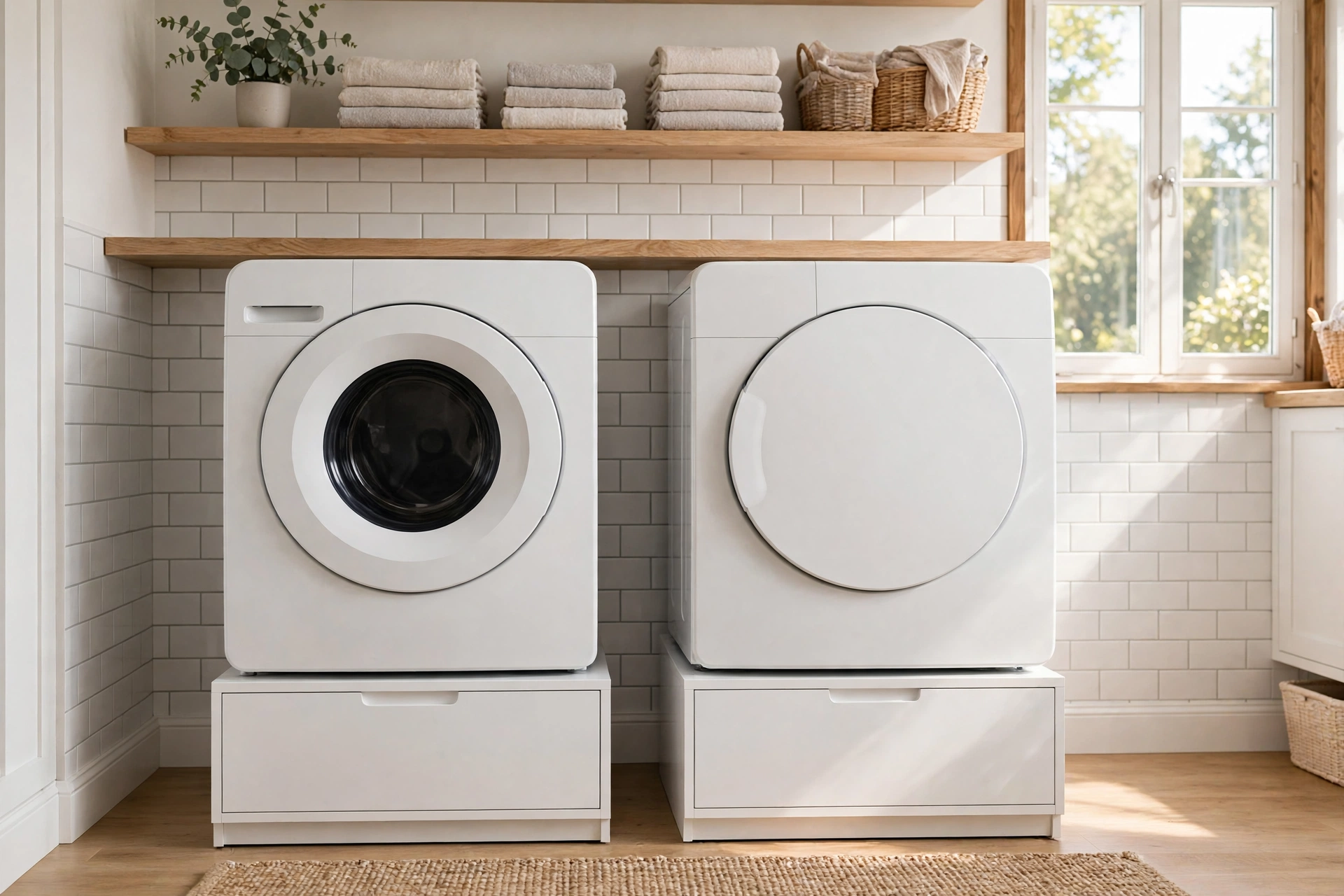
The front loader is its own discipline inside laundry: horizontal drum, door boot, high spin speeds, and a pump filter that owners are rarely told exists. We service front loaders across the major platforms and test under real loads. Washington households tend to discover front load washer trouble in batches: after storms, during heat waves, and in the first cold week, when machines that were quietly aging all decide together.
The front load fault families
Coins, hairpins, and collar stays all end up in the same two places: the pump filter and the pump. Drainage faults on front loaders start there. Boot gaskets fail three ways: torn, deformed, or simply never dried. Each has a different remedy, and only one of them is a part. Door locks lead the call list, because the machine will not turn a load it cannot prove is sealed; lock assemblies wear and their switches lie with age.
Spin, bearings, and suspension
High spin speeds make front loaders honest about wear: a roar that builds with rpm is the rear bearing, and it is the category's defining cost conversation. Suspension dampers and springs age under loads they were never sized for; chronic overloading shows up as a machine that travels during spin. Motor and control faults on modern front loaders are code rich; we read the stored faults and test the drive before boards are quoted.
How We Diagnose Front Load Washer Repair in Washington
We test front loaders the way they fail: loaded, spinning, and draining, with the fault codes read before the first cycle and cleared after the last. Georgetown and Dupont Circle kitchens are repaired in place by owners who value the machines they have.
Recent Project: Front Load Washer Repair in Columbia Heights
A call from Columbia Heights: Front loader leaving loads soaked. Testing found the pump filter packed with lint, coins, and a collar stay. We cleared the filter and pump, verified spin extraction on a towel load, and showed the owner the filter routine. Summer storm flickers age control boards across whole wards at once here.
Front Load Washer Repair Cost in Washington, DC
What moves the figure is drum access: front load wear parts sit behind panels, while bearing work means the tub comes apart, and labor follows that reality. There are no parts ordered on a hunch: the figure follows the diagnosis, in writing, and it holds for the work described. Condo and co-op rules in buildings from Foggy Bottom to Chevy Chase shape visit planning, and the form is where that planning starts.
Why Washington Calls Washington DC Appliance Repair Co for Front Load Washer Repair
Our approach is platform knowledge plus measurement: the codes, the filter, the boot, and a loaded spin tell us nearly everything before a part is named. If the repair stops making sense at any point in the diagnosis, you hear it at that point, with the numbers. That rule has cost us jobs and earned us the neighborhood, and it is not changing. District water hardness writes scale into elements and inlet valves on a schedule we know by heart.