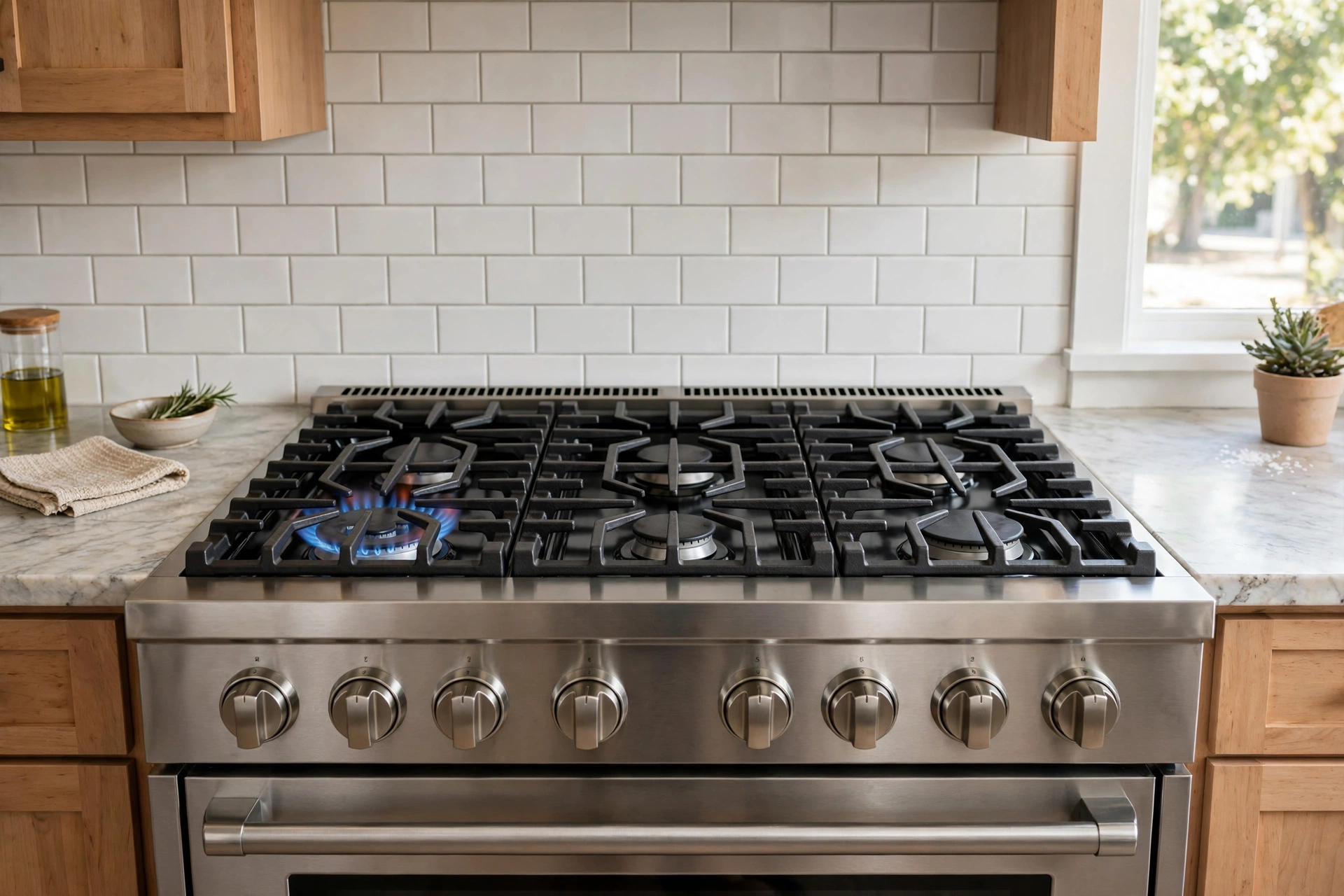
This page covers the gas fired half of the kitchen and laundry: ranges, ovens, cooktops, and dryers. Gas work is diagnosed electrically and mechanically, and every job ends with leak testing and flame verification, because working and safe are the same standard here. Ask around Washington and the gas appliance stories rhyme: the odd noise ignored for a month, the few degrees lost a week at a time, then the call. The diagnosis is what separates the cheap version of that story from the expensive one.
Ignition systems and their logic
Gas dryers add cycling coils that fail warm: strong ignition at minute one, silence by minute twenty, a pattern we test by running the machine, not by replacing parts in sequence. The hot surface igniter is both match and safety witness: it must draw enough current to prove heat before the valve opens, and its slow weakening is the most common gas oven fault in existence. Cooktop ignition is a chain of small parts; the one that clicks wrong, or not at all, localizes the fault before a tool comes out.
Valves, flames, and venting
Flame quality is diagnostic data: lifting, yellow, or lazy flames report air and pressure problems that parts alone do not fix. The final step of gas work is always verification: leak test at every disturbed joint and a combustion check, documented in the visit notes. There is no adjustment that makes a doubtful valve trustworthy. Valves are binary in our book, proven or replaced.
How We Diagnose Gas Appliance Repair in Washington
We test current draw at the igniter, valve response, and flame behavior across cycles, because gas faults are time and temperature dependent and cold tests lie about them. Condo and co-op rules in buildings from Foggy Bottom to Chevy Chase shape visit planning, and the form is where that planning starts.
Recent Project: Gas Appliance Repair in Georgetown
A call from Georgetown: Gas oven preheating slower every month. Testing found the igniter drawing below the valve's opening threshold. We replaced the igniter, timed preheat, and leak tested the valve connection. A repair in the District is proven under load before it is called finished, rowhouses and high rises alike.
Gas Appliance Repair Cost in Washington, DC
Expect $160 to $360 here. The igniter, the most common gas part in the trade, sits at the friendly end; valve and board work sit at the top. There are no parts ordered on a hunch: the figure follows the diagnosis, in writing, and it holds for the work described. Petworth, Shaw, and Columbia Heights rentals route turnover work through written findings as standard practice.
Why Washington Calls Washington DC Appliance Repair Co for Gas Appliance Repair
Our rule in gas is that the proof cycle is part of the repair: full heat, full time, leak test after, so the appliance is returned with evidence, not optimism. The details of this gas appliance visit, findings, parts fitted, and readings taken, are written into a visit record you keep. If the machine ever argues with our repair, that record is where the conversation starts. Basement and in-law units across the District get kitchen grade diagnosis, not a lesser verdict.