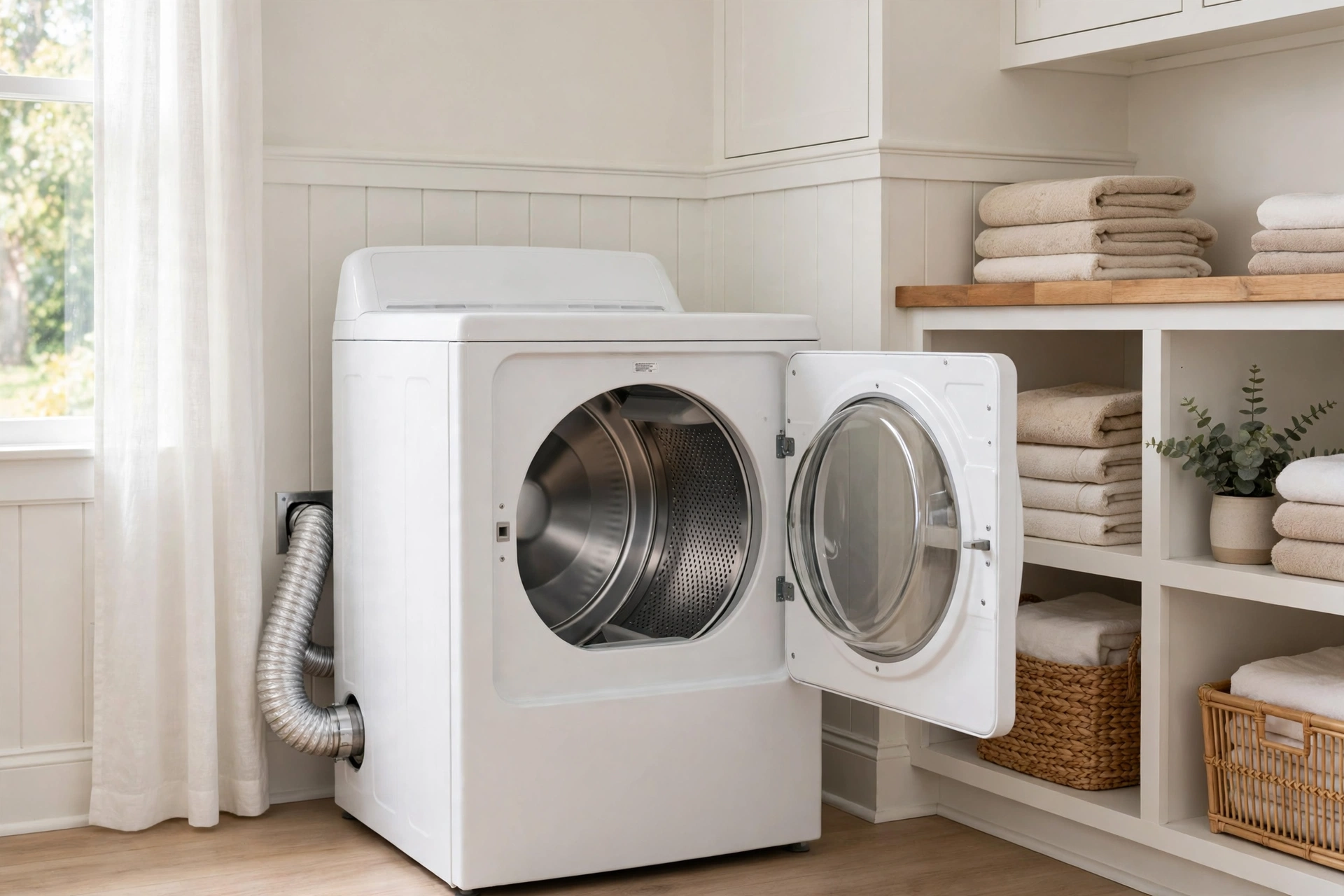
A dryer that runs without heat turns laundry day into laundry week. We repair gas and electric dryers, and most no heat faults come down to a short list of wear parts that testing identifies in minutes. There is a pattern to dryer failures in Washington: they are noticed on weekends, before guests, and ahead of holidays with suspicious reliability.
Half of appliance diagnosis is geography. Washington's housing runs from Capitol Hill rowhouses and Georgetown townhouses to condo towers in Shaw and Logan Circle and single family streets in Chevy Chase and Brookland, and every housing type keeps its own appliance profile. The water here scales heating elements and inlet valves on a schedule, summer humidity works on every door seal in the city, and the grid's storm flickers are written into control boards across whole neighborhoods at once.
Dryer Repair Problems We Diagnose and Repair in Washington
No heat and long dry times
Gas dryers that start hot and finish cold are telling you about igniters and valve coils, the two wear parts that age together. Tumbling with cold air is the classic electric dryer pattern: an open heating element or a tripped thermal fuse, both confirmed with a continuity meter. Long dry times with real heat point outside the machine: a vent run clogged with lint is the most common cause in the trade, and it overworks every part inside the dryer. We treat a blown thermal fuse as evidence. Something made the dryer run hot, and the repair includes finding it, usually in the vent or the blower housing.
Noise, tumbling, and drum faults
Squealing that fades as the machine warms is the idler pulley bearing announcing its retirement. A humming dryer that will not tumble has usually parted its belt, the plainest mechanical failure the machine offers. Thumping that keeps time with the drum is usually a flattened roller or a cracked drum glide, wear parts with a predictable life.
Controls, moisture, and safety
Lint is the safety topic in every dryer visit: we clear the cabinet and blower housing as part of heat repairs, because lint plus a failing element is the combination that matters. Dryers that stop mid cycle and restart later are protecting themselves from heat, which returns the diagnosis to airflow and thermostats. Auto dry cycles that end damp have lost their moisture sensor accuracy to fabric softener film, a cleaning fix before it is a parts fix.
How We Diagnose Dryer Repair in Washington
We test the heat circuit part by part and measure what comes out of the vent, because a dryer is a system of machine plus ductwork and the fault lives in either half. Petworth, Shaw, and Columbia Heights rentals route turnover work through written findings as standard practice.
Recent Project: Dryer Repair in Dupont Circle
A call from Dupont Circle: Dryer shutting down twenty minutes into cycles. Testing found a vent run packed with lint at the exterior hood. We cleared the vent path, replaced the overheated thermal fuse, and confirmed exhaust temperatures. A repair in the District is proven under load before it is called finished, rowhouses and high rises alike.
Dryer Repair Cost in Washington, DC
Published guides average laundry repair near $184, and the honest band on this page runs $140 to $315: belts, fuses, and rollers low in the band, motors and boards at the top. The quote you approve is the figure you pay for the diagnosed repair, written before work begins, with the diagnostic visit credited toward it when you go ahead. Anacostia and Congress Heights households get the identical diagnostic standard as any address in the city; the map changes nothing.
Why Washington Calls Washington DC Appliance Repair Co for Dryer Repair
Our rule with dryers is to repair the system, not the symptom: the part that failed, the airflow that stressed it, and a test load dried on the timer before we leave. The details of this dryer visit, findings, parts fitted, and readings taken, are written into a visit record you keep. If the machine ever argues with our repair, that record is where the conversation starts. The District's housing runs from Capitol Hill rowhouses to Cleveland Park colonials, and every diagnosis starts with the building in front of us.