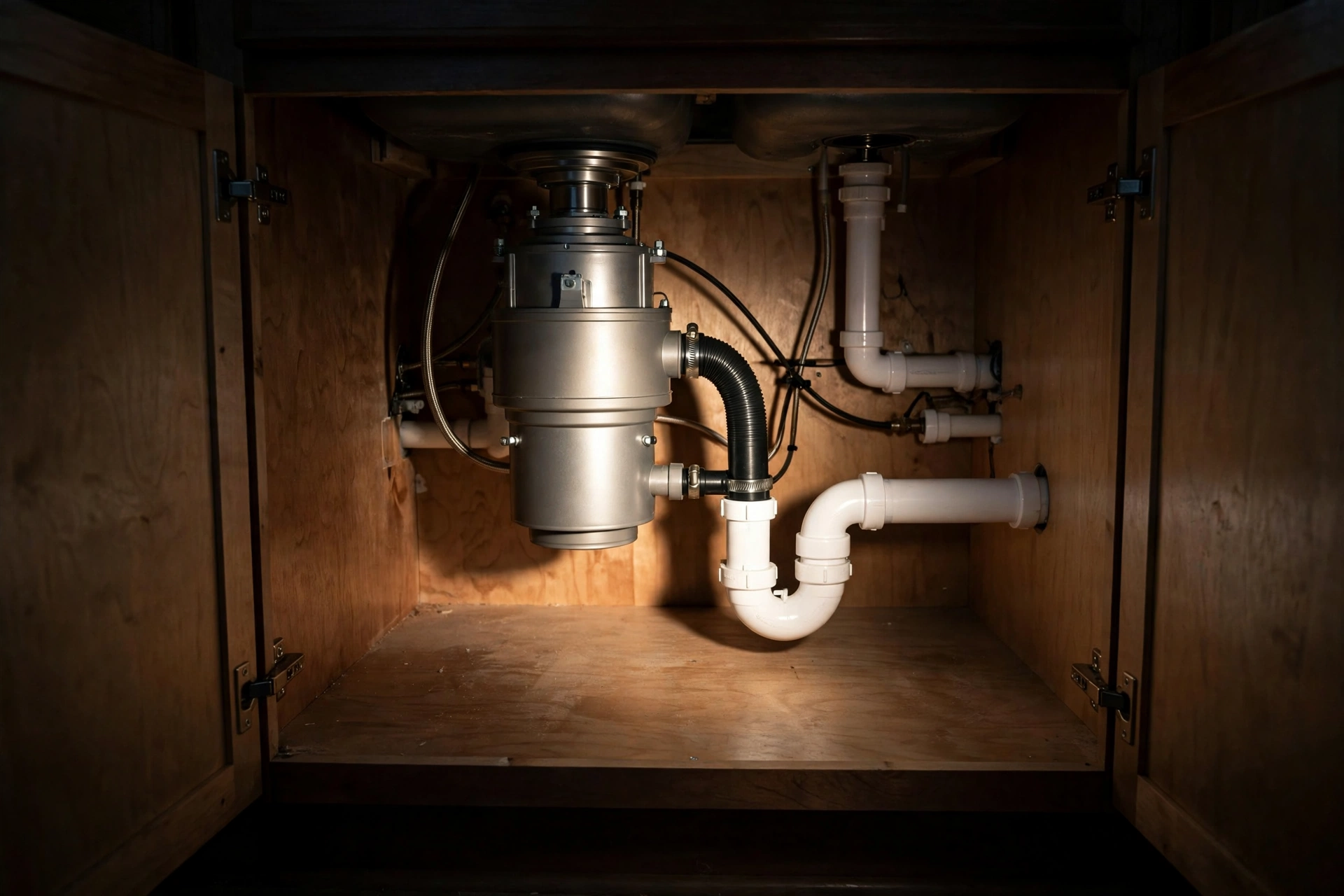
Disposals fail audibly: the hum, the silence, the leak, and the grind that sounds like gravel. We repair batch feed and continuous feed units, test the motor and the chamber honestly, and price repair against replacement with no thumb on the scale. The garbage disposal does not care that Washington has dinner plans. When it fails, it fails on its own schedule, and the repair has to be built on evidence.
Jams, hums, and resets
A humming disposal that will not turn is jammed, not dead, until proven otherwise: a bone fragment or bottle cap wedged at the flywheel is the classic find. The reset button trips on overload and heat; a disposal that trips repeatedly is reporting a motor working too hard or a chamber grinding against wear. A silent disposal gets the circuit tested before the unit is condemned, because switches and connections die more often than motors do.
Leaks and chamber wear
Performance fades before failure arrives: long grinds, standing debris, and rising noise are wear talking, and replacement timing becomes a judgment we make with you. Where a disposal leaks decides everything. Two of the three leak locations are seals and connections; the third, through the bottom of the grind chamber, is end of life and we say so plainly. Splash guards and baffles tear and harden; they are small parts that control both mess and noise and are renewed while we are under the sink.
How We Diagnose Garbage Disposal Repair in Washington
Disposal diagnosis is hands off and power off first: flywheel freedom, chamber inspection by light, then electrical tests, then a wet run under observation for leaks. Petworth, Shaw, and Columbia Heights rentals route turnover work through written findings as standard practice.
Recent Project: Garbage Disposal Repair in Petworth
A call from Petworth: Disposal humming and tripping its reset. Testing found a bottle cap wedged at the flywheel and a chamber full of glass grit. We freed the flywheel, flushed the chamber, reset the overload, and ran the unit under load. District water hardness writes scale into elements and inlet valves on a schedule we know by heart.
Garbage Disposal Repair Cost in Washington, DC
Expect $120 to $280 here. A jam cleared and a seal renewed are small figures; when replacement wins, the labor to swap the unit sits at the top of the band and the unit itself is priced at quote. One figure is quoted in writing after diagnosis, and the diagnostic fee folds into the repair when you proceed, which is the arrangement the published guides describe. Basement and in-law units across the District get kitchen grade diagnosis, not a lesser verdict.
Why Washington Calls Washington DC Appliance Repair Co for Garbage Disposal Repair
Disposals attract two bad outcomes: replaced when jammed, and repaired when corroded through. Our job is the ten minutes of testing that keeps you out of both. Every job on this page ends with the appliance run through its work in front of us. A repair that has not performed is a theory, and we do not leave theories running in your kitchen. Georgetown and Dupont Circle kitchens are repaired in place by owners who value the machines they have.