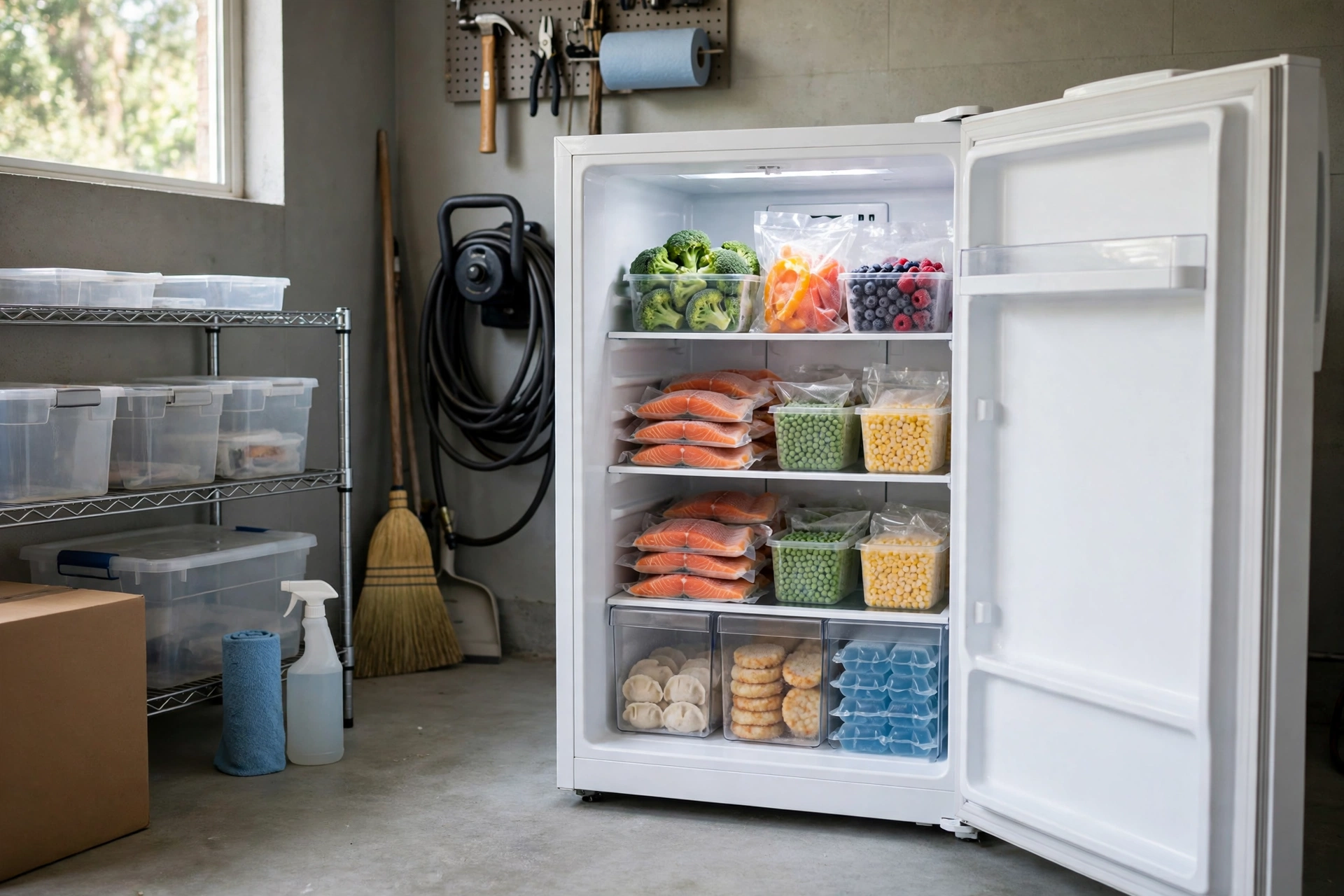
Freezers and ice makers fail as a pair in most houses, because the ice maker is simply the freezer's most demanding tenant. We repair standalone freezers, chest and upright, and ice makers both built into refrigerators and freestanding under counter. There is a pattern to freezer failures in Washington: they are noticed on weekends, before guests, and ahead of holidays with suspicious reliability.
Temperature and frost faults
Chest freezers die differently, usually controls and compressors after long quiet lives, and their simplicity makes most repairs worthwhile. Freezers that run warm by a few degrees are failing the way that costs most: food thaws at the edges and refreezes, and the damage is done before anyone notices. Frost patterns diagnose freezers the way frost patterns diagnose refrigerators: wall frost means defrost failure, door frost means a sealing problem, and even frost with warm temperatures means capacity trouble.
Ice maker faults, the full family
Slow production with hollow or small cubes means the freezer is a few degrees too warm or the water flow is restricted, both measurable on the visit. An ice maker that makes nothing is starved, frozen, or dead, in that order of likelihood: supply valve, fill tube, then the maker unit. Flooding bins point at the inlet valve weeping past its seal or a level control that lost its reference, and both are standard repairs.
How We Diagnose Freezer and Ice Maker Repair in Washington
We measure what the freezer holds, not what the dial claims, and we run the ice maker through a forced cycle so its failure happens in front of us. The visit record stays with the household, readings and part numbers included, wherever in DC the home sits.
Recent Project: Freezer and Ice Maker Repair in Capitol Hill
A call from Capitol Hill: Ice bin flooding and freezing into a slab. Testing found the inlet valve weeping past its seal between cycles. We fitted a new valve, cleared the bin and auger, and confirmed dry cycles over a full day of production. Anacostia and Congress Heights households get the identical diagnostic standard as any address in the city; the map changes nothing.
Freezer and Ice Maker Repair Cost in Washington, DC
What moves the figure is whether the fault lives in the cold system or in the accessories: a maker or a valve is an hour, while compressor work is a different class of job. One figure is quoted in writing after diagnosis, and the diagnostic fee folds into the repair when you proceed, which is the arrangement the published guides describe. Summer storm flickers age control boards across whole wards at once here.
Why Washington Calls Washington DC Appliance Repair Co for Freezer and Ice Maker Repair
Freezers protect hundreds of dollars of food on a good day, so we diagnose with the thermometer first and talk parts second. A freezer reading is a fact; a guess about a freezer is expensive. Every job on this page ends with the appliance run through its work in front of us. A repair that has not performed is a theory, and we do not leave theories running in your kitchen. Petworth, Shaw, and Columbia Heights rentals route turnover work through written findings as standard practice.