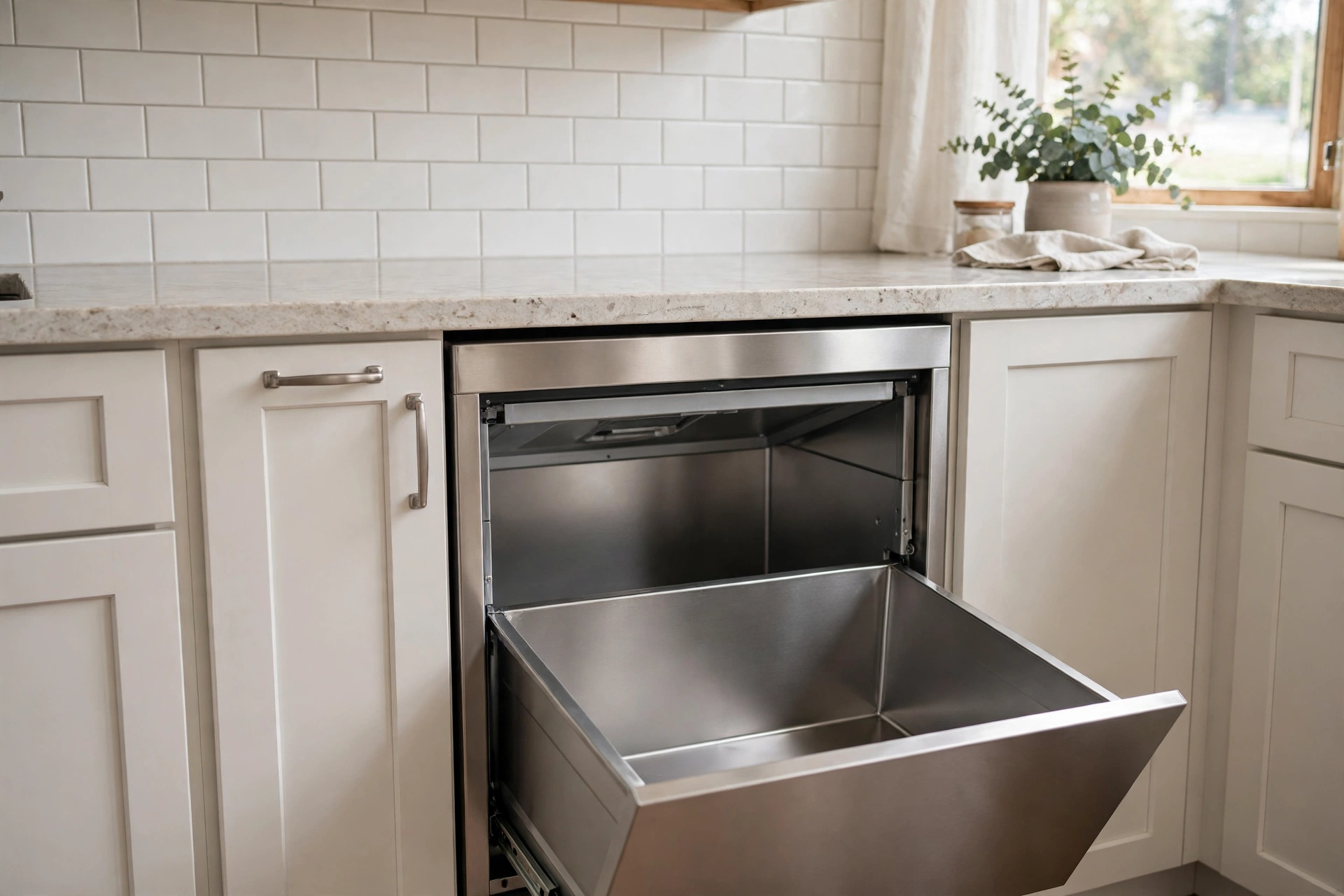
A compactor is a simple machine asked to do violent work: a ram, a drive, and a drawer that takes the abuse. We service the compactors still standing in the region's kitchens and are honest about the parts horizon on older models. In Washington, the trash compactor calls follow the housing: Washington's housing runs from Capitol Hill rowhouses and Georgetown townhouses to condo towers in Shaw and Logan Circle and single family streets in Chevy Chase and Brookland, and every housing type keeps its own appliance profile.
Drive and ram faults
Weak compaction with a healthy sounding motor is mechanical loss: chain stretch, worn sprockets, or a ram screw in need of service. When the ram stalls or reverses early, the drive chain and its switches are the first inspection, because the motor usually outlives both. A drawer that binds or sags changes how the ram meets its load, and correcting the drawer is part of restoring the crush.
Switches, safety, and age
Safety switches on a compactor are not bypass material. A unit that runs with the drawer open has failed its most important test. We are direct about orphan models: what exists, what can be adapted, and what is gone, before a dollar of parts money is committed.
How We Diagnose Trash Compactor Repair in Washington
Compactor diagnosis runs the ram through observed cycles with the drawer loaded lightly, then inspects chain tension, switch timing, and drawer geometry in that order. District water hardness writes scale into elements and inlet valves on a schedule we know by heart.
Recent Project: Trash Compactor Repair in Capitol Hill
A call from Capitol Hill: Compactor ram reversing before it crushed. Testing found a stretched drive chain slipping at the sprocket under load. We renewed the chain and sprockets, set the reversing switch timing, and cycled the ram under load. Georgetown and Dupont Circle kitchens are repaired in place by owners who value the machines they have.
Trash Compactor Repair Cost in Washington, DC
Expect $150 to $330 here, with the caveat this category carries everywhere: a discontinued part can move a job from repair to retirement, and we establish parts reality before quoting firmly. The quote you approve is the figure you pay for the diagnosed repair, written before work begins, with the diagnostic visit credited toward it when you go ahead. Anacostia and Congress Heights households get the identical diagnostic standard as any address in the city; the map changes nothing.
Why Washington Calls Washington DC Appliance Repair Co for Trash Compactor Repair
Our approach is candor plus persistence: test the machine, hunt the part with real effort, and report the odds truthfully at every step. The details of this trash compactor visit, findings, parts fitted, and readings taken, are written into a visit record you keep. If the machine ever argues with our repair, that record is where the conversation starts. Petworth, Shaw, and Columbia Heights rentals route turnover work through written findings as standard practice.